3-Reel Slots in the UK: A Guide to Odds and Play
 Available in GB
A guide to how online format, stakes, practice play and game mechanics shape what three-reel slots can—and cannot—show.

Table of Contents
- Three Reels on a Screen: What Online Play Changes
- Real-Money Play and the Cost of a Session
- Classic Looks, Free Play, and What They Do Not Prove
- Reading Three-Reel Slots Without a Ranking
- Free Spins, Real Stakes, and the Limits of Playing Practice
- Fruit-Machine Style and the Three-Reel Format
- Slot Odds, House Edge, and the Shape of Returns
- Reels, Paylines, and Volatility: Features That Change the Comparison
- No-Download Play and a Cautious Look at Odds
- Traditional Slot Strategy: What the Numbers Allow
Three Reels on a Screen: What Online Play Changes
A three-reel game keeps its compact layout when it moves from a physical machine to a website or app. The setting changes more than the number of reels: online play takes place through a remote gambling service, under rules that govern the operator, the account and the way a game cycle runs. For online 3 reel slots in Great Britain, the relevant distinction is therefore not only what appears on screen, but whether the service is authorised to offer gambling to people in the market.
The UK Gambling Commission regulates commercial gambling in Great Britain and is the sole regulator for that activity there. Its remit covers remote gambling offered to consumers in Great Britain even when the operator’s key equipment is located elsewhere. Businesses need an operating licence to provide gambling, while individuals carrying out certain regulated roles may need personal licences. The equipment’s location does not move the service outside the Commission’s reach when it is offered to consumers in Great Britain.
Choosing a reel slot site involves more than the games on offer; payout timing is one practical detail worth checking. This guide gives you a concise reference point for considering options in the UK.
Payout speed: 1-3 business days x3bet lists a payout speed of 1–3 business days.
Payout speed: 1-3 business days NightWin lists a payout speed of 1–3 business days.
Payout speed: 1-3 business days Britsino lists a payout speed of 1–3 business days.
Payout speed: 1-3 business days NightLuck lists a payout speed of 1–3 business days.
Payout speed: 1-3 business days SpinFormula lists a payout speed of 1–3 business days.
Payout speed: 1-3 business days Chanze lists a payout speed of 1–3 business days.
Payout speed: 1-3 business days WinBeast lists a payout speed of 1–3 business days.
Payout speed: 1-3 business days Revery Play lists a payout speed of 1–3 business days.
Payout speed: 1-3 business days Amunbet lists a payout speed of 1–3 business days.
Payout speed: 1-3 business days EvoSpin lists a payout speed of 1–3 business days.
That matters for a small-format slot as much as for any other online casino game. A three-reel display does not have a separate regulatory status simply because it resembles a traditional machine. A legal online casino serving people in the UK must hold a current operating licence from the UK Gambling Commission. Offshore sites outside that system do not provide the same UK regulatory protection; their presence on the internet is not evidence that they are authorised for the British market.
A licence is a specific condition, not a visual impression. The Commission’s public register allows the operator’s status to be checked before an account is funded. That check belongs to the operator, not to the game title: a familiar design, a polished interface or a recognisable provider name cannot establish that the casino offering it holds the required licence. The game and the service are separate parts of the transaction.
The account also has to be treated as an age-controlled gambling account. Operators must verify a customer’s age before allowing deposits. Online gambling in the UK is legal for adults aged 18 and over when offered by an operator holding a UK Gambling Commission licence. In practical terms, a registration screen is not the end of the process: the operator’s checks determine whether the account can proceed to depositing.

For online slot play in Great Britain, a specialist review reports different maximum stakes by age: £5 per game cycle for customers aged 25 and over, and £2 for those aged 18 to 24. The figure applies to the amount staked in an individual game cycle, not to a promise about how much a session will cost or return. It is a regulatory condition affecting the way a licensed service must offer online slots, rather than a feature of the three-reel format itself.
The interface is also subject to rules that are easy to overlook when a game is presented as a simple sequence of spins. Autoplay is banned for online slots in Britain. A game cycle must last at least 2.5 seconds before another can begin. These conditions apply to the online slot experience; they do not depend on whether the reels display fruit symbols, sevens or another theme. A quick-looking animation cannot remove the minimum time between cycles.
Account controls form another part of the remote setting. Before a new customer makes a first deposit, the operator must prompt them to set a financial limit, and account-level limit controls must remain accessible. UK-licensed casinos must also provide responsible-gambling tools, including self-exclusion. These measures do not change a game’s symbols or mechanics; they place controls around access and spending at account level.
Payment rules affect the route into play as well. Remote gambling operators cannot accept credit-card payments for gambling, including credit-card funds routed through a money service business. They also cannot accept wallet payments where the wallet allows credit-card funds to be used for gambling. The payment method shown at checkout therefore has to be considered alongside the account and licence, not as a convenience detail detached from the rules.
Regulatory Compliance
Offshore sites outside the UK Gambling Commission system do not provide the same regulatory protection for players in the British market.
A licensed service must provide an internal complaints process and access to an approved Alternative Dispute Resolution service. Operators also have to contribute to the Research, Education and Treatment levy. Together, these obligations define part of the framework around online casino play: who may provide it, what checks and controls apply, and how disputes can be handled. They do not make a three-reel game more favourable than another; they establish the conditions under which remote gambling is offered.
The screen makes a physical machine accessible through an account, but it does not turn the game into an unregulated product. For a three-reel slot played remotely, the practical baseline is a licensed operator, verified eligibility, account controls and a game cycle that follows the applicable rules. A classic-looking cabinet may be only a graphic; the operator’s regulatory status is the material condition.
Real-Money Play and the Cost of a Session
A real-money session puts funds at risk on each wager. Its cost is not captured by the largest win, the number of winning spins or the balance at one point during play. The relevant starting measure is the total amount staked across the session. Any money returned through wins reduces the net loss, or contributes to a net gain, but does not erase the amount that was wagered.
That distinction matters for three-reel slots played for real money. A session can include frequent small returns and still leave less money than it began with. It can also end ahead after a larger win. Neither outcome, viewed alone, shows what the game is expected to return over repeated play. A balance is a record of one sequence of results; mathematical expectation describes the average direction implied by the game’s terms across enough sessions.
A positive house edge means the game’s expected return to the player is below the amount wagered. Over enough sessions, that produces a negative mathematical expectation, regardless of whether losses arrive steadily or are interrupted by wins. The timing can change how the experience feels. It does not change the underlying calculation. Gradual losses are still losses in expectation; a run of favourable results does not reverse the house edge.

A useful session estimate therefore begins with the amount staked per game cycle and the number of cycles played. Multiplying those gives the total wagered, not the final loss. The final result also depends on returns, which vary from one sequence of spins to another. Treating total stakes as money definitely lost would overstate the cost; treating each win as proof that the session is profitable would understate the risk. Net outcome is the difference between funds returned and funds committed.
Free play has a different accounting basis. It uses fake money and awards no payouts, so it cannot produce a cash loss or a cash return. It may show how a sequence of spins unfolds, but its displayed balance is not a real-money result. A free session and a real-money session may involve the same game, yet only the latter exposes actual funds to the game’s expected return.
The word “best” does not settle this comparison. A title cannot be judged as the best real-money option on the basis of a run of wins, a familiar reputation or the appearance of its results. The relevant question is what the game’s return conditions imply for the amount wagered. Without a comparable mathematical measure, a ranking based on impressions would give more certainty than the figures justify.
- Use total amount staked to estimate session cost
- Consider net outcome as the difference between returns and funds committed
- Base expectations on mathematical measures
- Judge a real-money option based on a run of wins
- Treat total stakes as money definitely lost
- Use each win as proof that a session is profitable
The same accounting applies whether a three-reel game is described as old-fashioned, retro or fruit-machine style. Those labels do not set the cost of a session. The cost comes from wagering and the returns attached to the game, not from how familiar the format appears. For a player considering real-money play, the practical distinction is between money exposed to wagering and money merely shown in a practice balance.
A session can finish with a win, a loss or no meaningful change in funds. Those are possible short-term outcomes, not evidence that the expected value has changed. The house edge remains relevant even when wins arrive often enough to make the balance move gradually. The arithmetic is indifferent to whether the sequence feels generous.
Classic Looks, Free Play, and What They Do Not Prove
A classic three-reel slot is recognisable by its compact reel layout and familiar symbols. That description concerns presentation. It does not establish whether the game is free to play, whether a stake is involved, or whether a displayed result can produce a payout. Those are separate conditions, and the screen’s appearance cannot settle them.
The distinction matters because the same visual style can appear in different play modes. A game that resembles a traditional fruit machine may be offered for real-money play, for free play, or in both forms. The reels and symbols may look alike while the financial terms differ. “Classic” describes a style; it is not a label for the payment model.
Free classic three-reel games use fake money and award no payouts. Any balance or result shown within such a mode is part of the simulation, not money available to withdraw. A winning combination there may demonstrate how the game displays an outcome, but it does not create a cash return. The distinction is simple, even if the interface makes the two modes look nearly identical.

Real-money play has a different consequence: stakes are involved, and any payout depends on the terms of that game and session. A familiar set of symbols does not establish those terms. Nor does a realistic-looking balance prove that real funds are being used. The relevant information is the play mode and its stated conditions, not whether the artwork resembles a physical machine.
This also helps make sense of the comparison between classic slots and video slots. The labels generally point to differences in presentation, such as a pared-back reel display versus a more elaborate screen. They do not, by themselves, tell whether a game is free or paid, or what its financial outcome can be. A video-style presentation is not proof of real-money stakes; a classic layout is not proof of free play.
For anyone considering whether to play a three-reel slot, the first distinction is therefore not old-fashioned versus modern-looking. It is simulated play versus wagering with real funds. The visual category can be noted separately, but it cannot stand in for the mode’s terms. Treating appearance as evidence of payout conditions would be like treating packaging as the price: related to the product, but not the amount due.
A free-play label should be read literally as a description of the mode, not as a promise that practice results predict what would happen with money. No payouts are awarded in free play, and its funds are fake. A game’s appearance may remain unchanged when the mode changes, so the reels alone cannot reveal whether a result has financial value.
“Classic” describes a visual style and not a payment model; a game resembling a traditional fruit machine may be offered for real-money play, for free play, or both.
The practical distinction is not a minor detail of presentation. It determines whether a displayed outcome is merely part of a simulation or belongs to a real-money session. Classic styling can identify the look of a game; only the stated mode and conditions establish what the play involves.
Reading Three-Reel Slots Without a Ranking
A three-reel slot is defined by its visible reel count: three reels form the central game display. That description sets a boundary around the category, but it does not identify a single kind of game experience. Titles may share the same reel count while differing in their rules, symbols, layout and other mechanics. The number of reels is a useful first filter, not a complete basis for comparing games.
That distinction matters when considering requests for the best three-reel slots in the UK in 2026. “Best” needs a measure. It could refer to a player’s preferred presentation, a particular set of mechanics, or financial terms. Those measures are not interchangeable, and the reel count alone cannot settle them. A title cannot be placed first simply because its display has three reels.
The category is also narrower than the broad term “slot”. A five-reel slot remains a five-reel game even if its rules allow a bet to be applied across all five reels. How a bet is distributed does not change the number of reels shown. Likewise, a game’s name or familiar appearance does not establish its reel count; the game itself has to be checked.

For a useful comparison, the first step is to confirm that a title actually uses three reels. The next is to consider what the comparison is meant to answer. A player concerned with game structure may care about rules and available features; someone comparing financial terms would need those terms rather than a label such as “classic” or “best”. A single overall order would combine different questions and conceal the basis for the result.
This page therefore treats three-reel slots as a category, not as a podium. It does not present a ranked list of titles or turn one game name into a universal recommendation. That is a more precise way to handle a category whose defining feature is simple but whose individual games may differ in important ways.
The year in a “best” label can make a page sound like a current league table. It does not, by itself, explain what has changed or which measure determines the order. A useful assessment should make its criteria clear and keep them separate: reel count identifies the format, while other game details answer other questions. Without that separation, a ranking can look decisive while saying little about why one title stands above another.
The practical boundary is straightforward: a three-reel slot belongs here because of its three-reel layout, not because it is automatically superior to games with another layout. The category can be identified consistently; a universal winner cannot be inferred from that definition alone.
Format vs Value
A three-reel layout identifies the game category, but it does not imply a universal winner or superior financial return.
Free Spins, Real Stakes, and the Limits of Playing Practice
A free-play version of a three-reel slot can show how a game responds to a spin, but it does not reproduce a real-money session in the financial sense. The balance is simulated, the money is fake, and no payout is awarded. A displayed win is therefore a game event, not money received. Promotional free spins are different: they may be attached to real-money terms, so the label alone does not establish whether a play is free of wagering conditions.
In free play, the basic sequence is easy to observe. A spin starts, the reels stop, and the symbols are assessed under the game’s rules. The paytable explains which combinations count and what the game assigns to them. This is enough to learn the controls and identify how a particular slot records outcomes. It is not enough to measure what the same play would return when funded with money.
The distinction matters because practice changes neither the game’s payout rules nor its underlying mathematics. It gives a record of simulated outcomes, but those outcomes do not establish a future real-money result. A run of apparent wins in practice is not evidence that a game will pay similarly when played for money; a run without wins is no more a forecast of what comes next. The practice balance has no cash value, so its movement cannot be treated as a profit or loss.
Questions about how to play a three-reel slot have a practical answer: understand the paytable, know what action starts a spin, and distinguish a recorded game result from a cash return. That describes operation, not a method for winning. There is no playing pattern that can turn a favourable-looking practice session into proof of a high payout in real-money play. A slot’s displayed combinations may make outcomes easy to follow, but visibility is not control.

The same limit applies when comparing games described as generous or as paying frequently. A short practice session can show what happened during that session; it cannot establish that a game will deliver a particular return over later sessions. Nor does a sequence of small simulated wins demonstrate that the game is profitable. The label “best paying” has no useful financial meaning without evidence about the game’s payout conditions, and practice results do not supply that evidence.
The relevant calculation is mathematical expectation. If a game has a positive house edge, its expected result for the player is negative over enough sessions. Losses may arrive gradually, and individual sessions can differ, but a slower pattern does not remove the disadvantage. Practice does not change that expectation because it does not change the game’s payout structure.
Free play is therefore useful for learning the rules and observing the interface, not for estimating real-money returns or testing a winning system. Its cleanest result is informational: the controls and paytable become familiar. The simulated balance remains simulated, and no amount of practice converts it into evidence of cash winnings.
Fruit-Machine Style and the Three-Reel Format
“Fruit-machine style” describes a visual vocabulary, not a complete account of how a slot works. Fruit symbols, familiar signs and compact reel layouts can give a game the appearance of a traditional machine. That appearance may explain why a title is described as a fruit slot, but it does not establish its payout rules, odds or stake conditions.
Visual terminology
“Fruit-machine style” refers to the use of fruit symbols and compact layouts to create a traditional look, but it does not establish the game’s payout rules, odds, or stake conditions.
A three-reel layout is a separate description: it refers to the arrangement shown on screen. The fruit-machine label refers more to presentation. The terms often appear together because a compact reel display can support a recognisably traditional look, but neither term guarantees the other. A game can use fruit imagery without following every convention associated with a classic machine, and a three-reel game need not use fruit imagery at all.
The distinction matters when comparing games. Symbols are part of what the screen presents; the rules determine what combinations count and whether a result pays. A cherry or a bell may look familiar, but its appearance alone cannot tell a player what it is worth, whether it is part of a winning combination, or how a win is calculated. Those details belong to the game’s rules, not its visual theme.
The same applies to the phrase “fruit machine”. It can suggest a particular style without saying whether the game is played for money, what stakes are available, or what conditions apply to any payout. The label is useful for describing the look, but it is not a substitute for reading the game information. A traditional appearance is packaging; the operative terms sit elsewhere.
That is why searches for fruit-style three-reel games can lead to titles that look related but behave differently. The reel count and the artwork provide a first description, not a basis for ranking or a forecast of returns. Even symbols that resemble those on a familiar machine do not make two games equivalent. Their rules must be considered independently.
When a game is described as a three-reel fruit machine, the safest reading is narrow: it has a three-reel presentation and fruit-machine styling. Nothing in that wording alone confirms a particular payout pattern or advantage to the player. The distinction is less dramatic than the graphics, but more useful when assessing what the game actually offers.

Slot Odds, House Edge, and the Shape of Returns
The odds of a three-reel slot describe the chances of different outcomes; they do not, by themselves, say whether a session will finish ahead. A game can produce winning results and still have a positive house edge. The distinction is between the result of a particular spin and the average financial result implied by the game’s probabilities and payouts.
Mathematical expectation is the average outcome across repeated play, calculated by weighting each possible result by its probability. For a game with a positive house edge, that expectation is negative for the player over enough sessions. This does not mean every session ends in a loss, or that losses arrive in a steady sequence. It means that the underlying calculation favours the house, even when individual outcomes vary.
A gradual pattern can make that disadvantage less obvious. Small returns may interrupt losing results, and a session may contain several winning spins. Those events change the immediate balance; they do not change the probabilities or payout structure that determine the expectation. A string of wins is a sequence of outcomes, not evidence that the average has shifted in the player’s favour.
The same distinction matters when interpreting claims about 3 reel slot machine odds. A stated chance of a particular combination, where available, concerns that combination alone. It does not establish the chance of finishing a session in profit unless the other possible outcomes, their probabilities and their payouts are also accounted for. Counting visible wins without accounting for their value gives an incomplete calculation.
Attention: A string of wins is merely a sequence of outcomes and does not indicate that the underlying mathematical house edge has shifted in the player’s favour.
Nor does the number of reels, on its own, establish whether a slot is favourable. The relevant question is how the game’s possible results are weighted against what each result pays. Without those inputs, a precise expectation cannot be calculated from the reel count or the game’s appearance.
The practical conclusion is narrow: odds describe likelihoods, while expectation describes the average financial direction implied by the complete set of outcomes. A positive house edge makes that direction negative over enough sessions, whether the losses appear quickly or are softened by intermittent returns. No pattern of gradual results removes the edge; it only changes how the balance moves along the way.
Reels, Paylines, and Volatility: Features That Change the Comparison
A three-reel layout describes how a slot is presented; volatility describes the pattern of its returns. The two terms answer different questions. Reel count and paylines concern the game’s structure, while volatility indicates whether returns tend to arrive as smaller, more frequent wins or less frequent, larger ones. A feature list alone does not establish which pattern applies.
Low-volatility slots spread returns across many smaller wins. High-volatility slots pay less often, with larger wins when they occur. Neither description tells how a particular session will unfold: volatility is a broad account of return distribution, not a schedule of outcomes. A run of small wins does not confirm that a game is low volatility, and a quiet stretch does not prove the opposite.

The familiar low-volatility profile is generally associated with five-reel games, not with three-reel slots as a category. Such games typically have at least twenty-five paylines, fixed jackpot amounts rather than progressive pools, and bonus rounds that multiply accumulated wins. These characteristics describe a common format; they do not establish that every five-reel game has all of them, or that a three-reel game must be built differently in every respect.
Paylines also need to be read in relation to the reels. A five-reel slot can apply a bet across all five reels, so its line structure affects how the wager is distributed through the game. That arrangement should not be assumed for three-reel games merely because both formats use reels and paylines. The number and arrangement of lines are game-specific features, not a reliable shortcut to volatility.
For three-reel slots with features, the useful comparison is therefore between the stated mechanics and the stated volatility, rather than between a feature-rich title and a plainer-looking one. Multipliers, bonus rounds or a named jackpot describe possible parts of a game’s structure; none, by itself, shows how often returns occur or how large they are likely to be. Likewise, a simple display does not prove that a game has a particular return pattern.
Free-play versions can reproduce a game’s presentation, but their presence does not make a feature a measure of volatility. The relevant distinction remains the game’s return pattern and the rules attached to its features. Reel count, paylines and volatility belong in the same comparison, but they are separate variables; treating one as evidence for another turns a description into a claim it cannot support.
Returns tend to arrive as smaller, more frequent wins.
Returns are less frequent but result in larger wins when they occur.
Typically associated with more paylines, fixed jackpots, and bonus rounds.
No-Download Play and a Cautious Look at Odds
A three-reel slot offered in a browser can be played without installing a separate application. That changes how the game is accessed, not the rules governing its outcomes. The reels still follow the game’s programmed mechanics, so a browser version does not acquire better odds merely because it opens directly on a web page.
The same distinction applies to a free version, if one is available. Its no-download format describes access, not a different set of probabilities. The appearance of familiar reels or symbols also cannot establish the chance of a particular result. For that, the relevant information is the game’s own rules and mathematical design; the number of reels alone is not a useful odds statement.
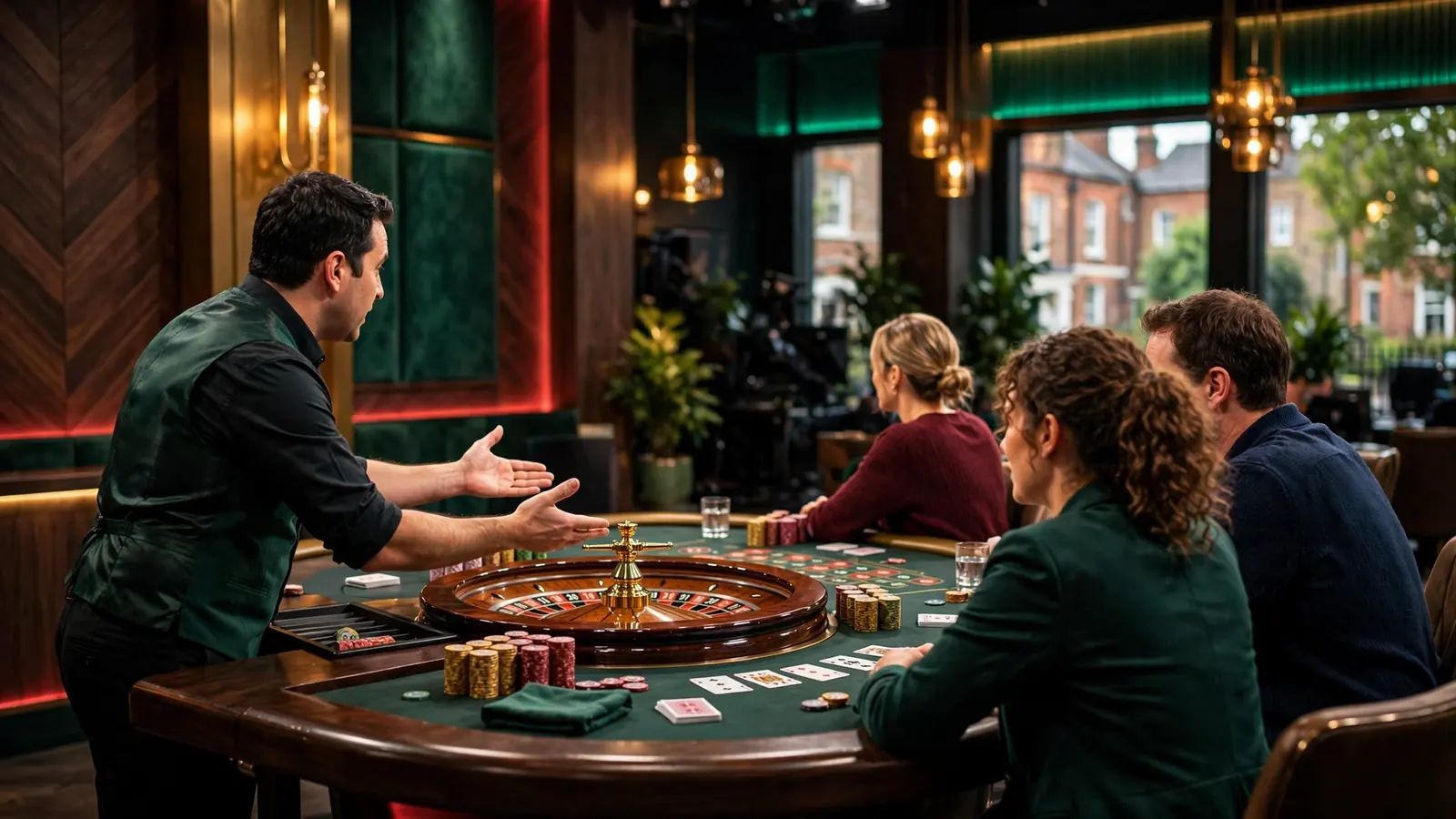
Roulette offers a clearer illustration of how a game’s structure can be counted. A European-style wheel has 37 pockets, numbered from zero through 36. An American-style wheel has 38: zero, double zero and the numbers from one to 36. The extra pocket changes the set of possible outcomes, even though a player can still place a bet on a single number.
A straight bet on one roulette number pays 35:1. That payout is not the same thing as the probability of winning, nor does the payout alone describe the expected return. The wheel’s pockets define the possible outcomes; the payout defines what a winning bet returns. Both matter when assessing the terms of a wager.
Three-reel slots do not have a comparable universal outcome count. Their visible format does not reveal how symbols are assigned, which combinations pay, or how frequently those combinations occur. Consequently, “three reels” is a description of presentation, not a numerical estimate of odds. A browser window removes the download step; it does not remove the need to distinguish presentation from game mathematics.

Traditional Slot Strategy: What the Numbers Allow
A strategy for traditional three-reel slots can organise decisions, but it cannot make the reels produce a particular result. The useful work is limited: understand the game’s rules before staking, decide in advance what amount is available for play, and stop when that amount is used. These steps control the size and duration of a session; they do not alter the game’s underlying terms.
A sequence of symbols that appears close to a winning line is not a promise that the next spin will complete it. Nor does a run of wins establish that the same pattern will continue. Treating recent results as instructions for the next spin turns a record of the past into a prediction without evidence. A strategy can set boundaries around that uncertainty, not remove it.
The same distinction applies to systems that change the stake after a loss or a win. Such a system changes how much is exposed on later spins. It does not change the slot’s rules or guarantee that a later result will recover earlier losses. The arithmetic can therefore become less favourable to a fixed session budget even when the method is described as disciplined.

A no-registration offer, where one is available, is an access condition rather than a strategic advantage. It says nothing by itself about the game’s rules or the likely result of play. The relevant terms remain those attached to the slot, not the ease of reaching its play screen.
The central limit is mathematical: any game with a positive house edge has a negative expected result over enough sessions. Losses may arrive unevenly or gradually, but gradual movement is still movement in the same direction in expectation. No sequence of stake choices can reverse that condition. Strategy is consequently a way to set boundaries and understand exposure, not a method for securing a return.
Roulette differs in the procedure by which a wager is made. Its betting choices are placed before the ball is released at the beginning of a round. A slot spin follows the game’s own mechanism; it does not offer that same pre-release betting decision. The distinction is procedural, not a claim that either format can be controlled into a profit.
Prepared by the Vegas Moose Casino 3 editorial staff.