
European Roulette Online in the UK: Odds and Play
 Available in GB
See how the single-zero wheel affects bet prices, what different formats offer, and why roulette-themed slots are a separate product.
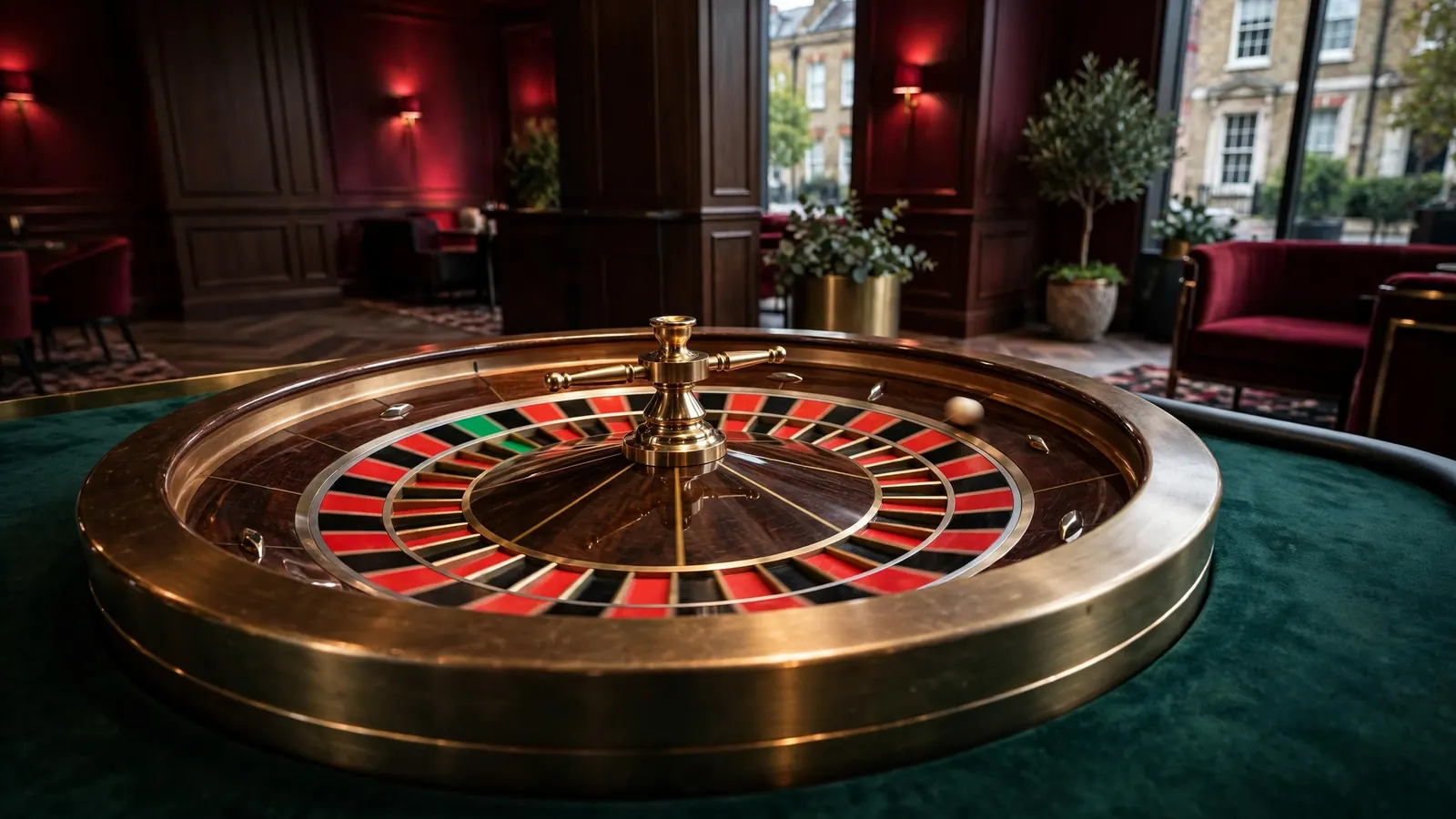
Table of Contents
- European Roulette’s Single-Zero Odds
- What “Best” Means in a Roulette Comparison
- How Roulette Bets Pay—and What a Streak Can’t Change
- RNG, Speed and Physical-Wheel Formats
- The Single-Zero Layout and Inside Bets
- Free Play, Real-Money Stakes and Account Conditions
- Reading the Roulette Table: Outside Bets and Layout
- Roulette-Themed Slots Are a Different Product
- Live European Roulette: Dealer, Licence and Safeguards
- European and American Roulette: The Zero Changes the Price
European Roulette’s Single-Zero Odds
European roulette is built around a wheel with 37 pockets: numbers 1 to 36 and one zero. Each spin ends with the ball in one pocket. The single zero is the feature that determines the game’s standard mathematical edge; it is not an additional numbered outcome with the same colour or parity as the others.
If the wheel and ball are operating fairly, every pocket has the same chance of being selected on a spin. That gives each individual number a probability of one in 37. The zero is therefore as likely to appear as any particular numbered pocket. It is also why a bet covering a group of numbers does not become certain merely because that group looks large: the zero remains a possible result unless it is included in the bet.
The key figure for standard European roulette is a house edge of 2.70%. This is a long-run measure of the game’s mathematical advantage to the casino, expressed against the total amount wagered. It is not a fee removed from every stake, nor does it describe what must happen on the next spin. A player can win or lose over a short run; the edge describes the expected balance across repeated play under the game’s rules.

That distinction matters when evaluating online European roulette. A result is decided by one spin, while the house edge is meaningful across many wagers. The percentage does not predict a particular session’s outcome, and it does not promise that losses will arrive at a steady rate. Random results can cluster: a number or colour may appear repeatedly, or may be absent for a time. Such a run does not alter the probability assigned to the next spin.
The zero creates the difference between the wheel’s full set of outcomes and the outcomes covered by many familiar wagers. A selection may cover several numbered pockets, but it does not follow that the chance of winning equals the apparent share of the wheel unless every pocket is treated correctly. In particular, the zero cannot be ignored when translating a chosen outcome into a probability. The edge arises from the relationship between the chances of results and the game’s payout rules, not from a casino adjusting the odds after a bet is placed.

A useful way to read the 2.70% figure is as a statistical cost built into the game. It is not an exact forecast for an individual’s final result. If the same amount is wagered repeatedly, the theoretical loss is calculated against the total turnover, not simply against the starting balance. A balance can rise, fall, or be exhausted before the long-run expectation has much practical relevance. The arithmetic is stable; the sequence of outcomes is not.
This also explains why a streak does not make a particular result “due”. Each spin is a separate chance event. If the ball has landed on zero several times, that history does not reduce the zero’s probability on the following spin. If it has not appeared for a while, the same principle applies. Past results describe what has happened, not a mechanism that changes the wheel’s next outcome.
The edge should also be kept separate from the experience of playing online. A screen can show a virtual wheel or a live physical wheel, but presentation does not change the underlying probability if the game follows standard European roulette rules. The relevant mechanics remain the 37 equally possible pockets and the rules governing the return on a winning wager. The format may affect pace and atmosphere; it does not turn previous results into evidence about the next one.
For someone comparing European roulette casinos in the UK, this is the mathematical baseline rather than a prediction of which session will be profitable. The single-zero wheel has a lower standard house edge than a version with an extra zero, but the percentage still represents an advantage for the house over repeated play. It does not make the outcome deterministic, and it does not remove the possibility of a substantial short-term win or loss.
The practical conclusion is narrow. European roulette gives each of its 37 pockets an equal chance on a fair spin, while its standard rules produce a 2.70% house edge. That figure describes the long-run price of the game, not a guaranteed result for any player or session.
What “Best” Means in a Roulette Comparison
When choosing an online European roulette casino in the UK, payout timing is one practical detail to check. This list highlights the payout information available for each operator.
Payout speed: 1-3 business days x3bet lists a payout speed of 1–3 business days, a useful detail to consider when choosing where to play European roulette.
Payout speed: 1-3 business days NightWin lists a payout speed of 1–3 business days for players considering its European roulette offering.
Payout speed: 1-3 business days Britsino lists a payout speed of 1–3 business days, giving readers a clear payout timeframe to consider.
Payout speed: 1-3 business days NightLuck lists a payout speed of 1–3 business days for its casino players.
Payout speed: 1-3 business days SpinFormula lists a payout speed of 1–3 business days, one relevant practical detail for prospective players.
Payout speed: 1-3 business days Chanze lists a payout speed of 1–3 business days for players looking at its casino games.
Payout speed: 1-3 business days WinBeast lists a payout speed of 1–3 business days, which may help players assess the practical side of its offering.
Payout speed: 1-3 business days Revery Play lists a payout speed of 1–3 business days for casino withdrawals.
Payout speed: 1-3 business days Amunbet lists a payout speed of 1–3 business days, giving readers one concrete detail to weigh.
Payout speed: 1-3 business days EvoSpin lists a payout speed of 1–3 business days for players considering its casino offering.
A useful comparison of European roulette starts with the terms attached to the game, not with a label such as “best”. The relevant details are the published return to player (RTP), the table’s minimum and maximum stakes, and any conditions that affect whether roulette wagers count towards bonus wagering. These figures describe different things: RTP concerns the game’s long-run mathematical return, table limits constrain the stake, and bonus rules determine how qualifying play is counted.
For standard European roulette, the published RTP should be consistent with the game’s stated rules. An RTP of 97.30% corresponds to a 2.70% house edge: across a sufficiently large volume of play, the theoretical return is 97.30% of stakes. It is not a forecast for an individual session or a promise that a particular balance will return that proportion. Short-term results can differ substantially; the published figure is useful because it makes the underlying cost of the game visible.
An RTP of 97.30% corresponds to a 2.70% house edge, representing the theoretical return across a sufficiently large volume of play.
The comparison is only meaningful when the RTP belongs to the exact version being offered. A title may have variants with different rules, so a figure attached to a game name alone is not enough. The game information should identify the applicable version and its return. If that information is absent or unclear, the number cannot be checked against the table being considered. A strong headline offer does not repair an unpublished game return.
Limits are another direct term. Minimum stakes indicate the amount required to enter a round; maximum stakes show the point beyond which a larger wager cannot be placed. Those boundaries matter independently of RTP. A low minimum may make a table accessible at a smaller stake, while a restrictive maximum may not suit a player intending to wager more. Neither changes the game’s probability, and neither makes a table better value by itself. The useful comparison is between the limits actually displayed for the relevant European roulette game and the stake range that can be used without exceeding them.
Bonus terms need a separate calculation. The headline value of bonus funds does not show how much roulette play will contribute towards the wagering requirement. A game-weighting percentage controls the amount credited: at a 10% rate, each pound wagered contributes ten pence towards qualifying turnover; at 20%, it contributes twenty pence. A 100% rate credits the full wager. The practical difference can be substantial, even when the displayed bonus is identical.
A specialist review reports that roulette game weighting differs between operators and formats: live roulette may be assigned 10% or 20%, while RNG roulette may be assigned 100%. These are reported terms, not a universal schedule. Across UK operators, roulette wagers are commonly counted at 10% to 20% of bonus wagering requirements, but the applicable rate must be checked in the offer’s own rules. Some games or formats may be excluded altogether. A bonus that cannot be wagered on the intended roulette game has no usable value for that purpose.
Since January 2026, UK rules cap bonus wagering requirements at 10 times the bonus amount for UKGC-licensed operators. A specialist review reports this regulatory change; it does not remove other conditions from an offer. Game weighting, eligible games, expiry terms and any withdrawal restrictions still affect the calculation. The cap limits the wagering multiple, not the amount of play required when roulette contributes only a fraction of each stake.
A comparison therefore needs the game-specific RTP, the limits for that table, and the bonus rules in force for the selected format. These can be checked separately rather than collapsed into one score. The most attractive headline may have a lower roulette weighting or a less suitable stake range; the arithmetic is in the terms, not the adjective.
How Roulette Bets Pay—and What a Streak Can’t Change
A roulette round has a simple sequence: a stake is placed on an available betting option, betting closes, the wheel spins, and the result determines whether that stake wins or loses. The payout depends on the type of bet and the odds assigned to it. A larger quoted payout generally corresponds to a less likely winning outcome; a smaller one reflects a bet that can cover more possible results. The payout table, rather than the size of a previous win, sets the return.
Payout notation describes profit relative to the original stake. A quoted rate of 35:1 means a winning stake earns 35 times its amount in profit, with the original stake also returned. That distinction matters when calculating the total credited after a win: the profit and returned stake are separate parts of the settlement. A losing stake is not returned.
When playing European roulette online, the same arithmetic applies whether the game is tried in free mode or played for money. Free play can show how a round settles without putting a cash stake at risk, but it does not change the odds or turn a losing result into a prediction about what comes next. Real-money results are settled against the amount staked and the game’s stated payout terms.

Betting systems change the size or timing of stakes, not the wheel’s outcome. The Martingale, for instance, calls for doubling a bet after each loss, with the intention of recovering earlier losses if a later bet wins. That intention is not a guarantee. Each increase commits more of the bankroll to a future result that remains uncertain, and a losing streak can damage the bankroll before a recovery bet arrives.
The arithmetic becomes less comfortable as the sequence continues. If a stake is repeatedly doubled, the next required stake grows quickly, while the losses already incurred remain losses until a winning result occurs. A strategy may therefore run into the practical limit of the available bankroll or the table’s permitted stake range. Neither a larger stake nor a longer sequence makes the next spin more favourable.
Other staking plans may hold the wager steady or vary it according to previous outcomes. They can organise decisions, but they cannot alter the probability of a chance-based result. A run of the same colour, number group or other result does not establish that the opposite outcome is due. Previous spins provide no reliable forecast of the next one.
This separates two calculations that are often blurred together: the payout attached to a winning bet, and the probability that the bet wins. The first is specified by the game; the second is not controlled by a staking system. A strategy can redistribute exposure across rounds, but no roulette strategy can predict the final outcome because roulette results are determined by chance. The stake plan is a budget decision, not an edge over the wheel.
Attention: Staking systems like the Martingale cannot alter the probability of a result and can lead to rapid bankroll depletion or hitting table limits.
RNG, Speed and Physical-Wheel Formats
European roulette can be delivered as a software-generated spin or as a live broadcast from a studio. The distinction is in how each result is produced and presented: an RNG game simulates the wheel, while a live game shows a physical wheel, a dealer and the ball’s drop. Both formats can appear in an online casino offering European roulette, but they create different playing tempos and viewing experiences.
In RNG roulette, a random number generator selects the result and the animation represents the spin. There is no physical wheel or dealer on screen. This format can move through spins more quickly, since the game does not need to wait for a studio procedure and ball to finish. Minimum stakes can also be lower; some RNG tables start at 10p. That makes the format a practical option where a smaller starting stake or a shorter session is relevant, though speed alone says nothing about the value of a game.
Live dealer roulette uses a real wheel in a studio. A camera streams the dealer’s actions and the ball landing, so each round has a visible physical process rather than a software animation. The wheel and ball provide the central visual reference, while the dealer manages the broadcast. This is the format for anyone who prefers the appearance of a casino wheel to a simulated spin. It can feel more measured because the next result depends on the live sequence being completed, rather than an animation running directly from a random-number system.

Speed roulette is a live format designed to shorten the interval between results. A specialist review reports that it can exceed 150 spins per hour, compared with 80–100 spins per hour at a standard table. Those figures are a description of the reported pace, not a promise for every table or session. The faster format still uses a physical wheel; its speed comes from the presentation and round cycle, not from replacing the wheel with an RNG.
The difference in pace has a straightforward practical consequence: more spins can be completed in the same period, so the session can move through its rounds faster. It does not change the underlying chance of a particular result. Nor does a live broadcast, by itself, make a wheel more favourable than a software version. Format affects how the outcome is delivered, not the probability attached to it.
A European roulette wheel with its green zero can therefore be encountered both as a rendered image in RNG play and as a physical object in a live studio. The first is a visual simulation governed by a random number generator; the second shows the wheel turning and the ball falling in real time. For choosing between formats, the useful distinctions are the presence of a dealer and physical equipment, the pace of play, and the minimum stake available—not a different set of outcomes.
The Single-Zero Layout and Inside Bets
A European roulette table is a betting map, not a picture of the wheel. Its numbered grid groups the numbers into rows and columns so that a bet can cover one number or a small, defined group. The wheel has one zero alongside numbers 1 to 36; the table gives the zero its own marked betting area, separate from the numbered grid.
On a European roulette table, the zero is placed in its own marked betting area, separate from the numbered grid of 1 to 36.
That distinction matters when reading the layout. A chip placed on a number selects that number alone. A chip placed on a line or boundary can cover the numbers touching that point. These are inside bets: the selection is tied to specific numbered pockets, rather than to a broad category elsewhere on the table. The positions of the numbers on the betting layout determine which combinations are available.
Single numbers, pairs and rows
A straight-up bet is placed directly on one number. If that number is selected, the payout is 35:1. The same straight-up payout applies to European and American roulette; the table format does not change the price of this individual bet. The zero is also a single number, so it can be selected directly on a European table.
A split covers two adjacent numbers. The chip is placed across their shared boundary, and either number can produce a winning result. Its payout is 17:1. “Adjacent” refers to the numbers touching on the table layout, not to numbers that happen to sit next to each other on the physical wheel. The betting position, rather than a guess about wheel order, defines the pair.
A street covers a horizontal row of three numbers. The chip sits at the end of that row, selecting all three as one bet. A winning street pays 11:1. This is a different placement from a split: the covered group is wider, and the payout ratio is lower than the payout for a single-number or two-number selection.

The ratios describe the payout, not the full amount returned. At 35:1, for instance, the stated figure is the winnings relative to the stake; the original stake is also returned on a winning bet. The same distinction applies to the split and street ratios. It keeps the displayed payout from being mistaken for the total settlement.
The table’s grid makes the available inside bets visible, but it does not alter the wheel’s outcomes. A number’s position in the grid only tells the player which chip placement selects it and which neighbouring numbers can be combined with it. It does not make that number more likely to appear. Nor does a larger covered group change the underlying result into a different kind of spin.
European roulette outside bets occupy other parts of the table, but they select categories rather than the numbered combinations described here. Their layout and payouts are a separate subject. For inside bets, the practical reading is narrower: identify the chosen number, shared boundary or horizontal row, then match that placement to its stated payout.
Free Play, Real-Money Stakes and Account Conditions
A European roulette demo is a way to play without risking a cash balance. It can show how a digital table works, while any practice balance or result remains separate from a gambling account. Demo play does not establish what a real-money session will cost: that depends on the stakes chosen and the outcomes produced. A roulette-themed slot demo is a different product, not a practice version of a roulette table.
Licensing Requirement
Real-money online gambling in Britain is legal only through sites holding a valid UK Gambling Commission (UKGC) operating licence.
With real-money European roulette, stakes are deducted from the account balance and any returns are credited there. This changes the financial consequence of each spin, not the game’s underlying rules. A displayed demo balance should not be treated as money available to withdraw or as evidence that a real-money result is likely to repeat.
In Britain, real-money online gambling is legal only through a site holding the relevant UK Gambling Commission (UKGC) operating licence. The minimum legal age is 18. Operators must verify a customer’s age before allowing a deposit, so registration alone does not mean funds can be deposited immediately. The licence number should be checked against the UKGC public register before depositing; a polished interface does not establish regulatory status.
Account setup also includes a financial-limit prompt. Remote operators must ask new customers to set a financial limit before the first deposit, and provide accessible account-level controls for managing limits. These are practical account conditions, not features of the roulette game itself. A limit set on the account determines the permitted financial boundary; it does not alter the odds or convert a losing result into a recoverable one.
Payment method restrictions apply even when a payment is routed through an intermediary. UKGC-licensed operators cannot accept credit cards for gambling, including credit-card payments sent through a money service business. Nor can they accept wallet payments where the wallet allows credit-card funds to be used for gambling. The route taken by the payment does not make prohibited credit funding acceptable.
A payment option appearing on a cashier page is not proof that every funding source behind it is permitted. The relevant distinction is whether credit-card funds can finance gambling, directly or through a qualifying service or wallet. Deposits must also pass the operator’s account checks, including the required age verification.
Free play and real-money play therefore differ at the point where an account balance can be funded and exposed to loss. Practice mode carries no cash stake; real-money play requires an eligible account, verified age, a permitted payment method and financial-limit settings. Those conditions should be settled before a deposit, rather than inferred from the availability of a demo.
Reading the Roulette Table: Outside Bets and Layout
On a European roulette table, the numbered betting grid sits at the centre, while outside-bet areas are arranged around its edges. Their labels group outcomes by colour, parity or position in the number range. This makes the layout easier to scan: inside bets select particular numbers or small groups, whereas outside bets cover a broader category.
The colour boxes are marked red and black. A red or black wager wins when the result belongs to the selected colour; the zero is neither, so it does not qualify as either colour. The parity boxes are labelled even and odd. The high and low areas divide the numbered range into its lower and upper portions. Each label represents a different category, so the placement matters more than the chip’s proximity to the centre of the table.
These outside bets all pay 1:1. A winning stake is matched by an equal amount in winnings, with the original stake also returned. That payout is easy to read, but it does not make the categories interchangeable: each depends on a different feature of the result. Colour is not parity, and neither tells whether a number is high or low.
Outside bets on colour that pay 1:1; the zero does not qualify as either colour.
Outside bets on parity that pay 1:1.
Outside bets dividing the numbered range into upper and lower portions, paying 1:1.
Digital tables may present the same betting areas in a more compact format than a physical cloth. The labels can appear beside the numbered grid, below it or in a separate panel, depending on the game interface. The underlying distinction remains: the grid is for number-specific selections, while the labelled edge areas are for outside bets. Checking the label before placing a chip prevents a selection intended for one category from landing in another.
A European roulette casino table layout is therefore best read in layers. First identify the numbered grid; then locate the labelled categories around it. The colour and parity choices are visually direct, while high and low require reading the table’s range labels. On a digital screen, the bet slip or highlighted area can confirm where a selection has been placed.
There is no special European roulette strategy hidden in the outside-bet layout. It organises the available categories; it does not change their stated payout. Treating the layout as a map of bet types is more useful than treating its position or colour coding as a signal about the next result.
Roulette-Themed Slots Are a Different Product
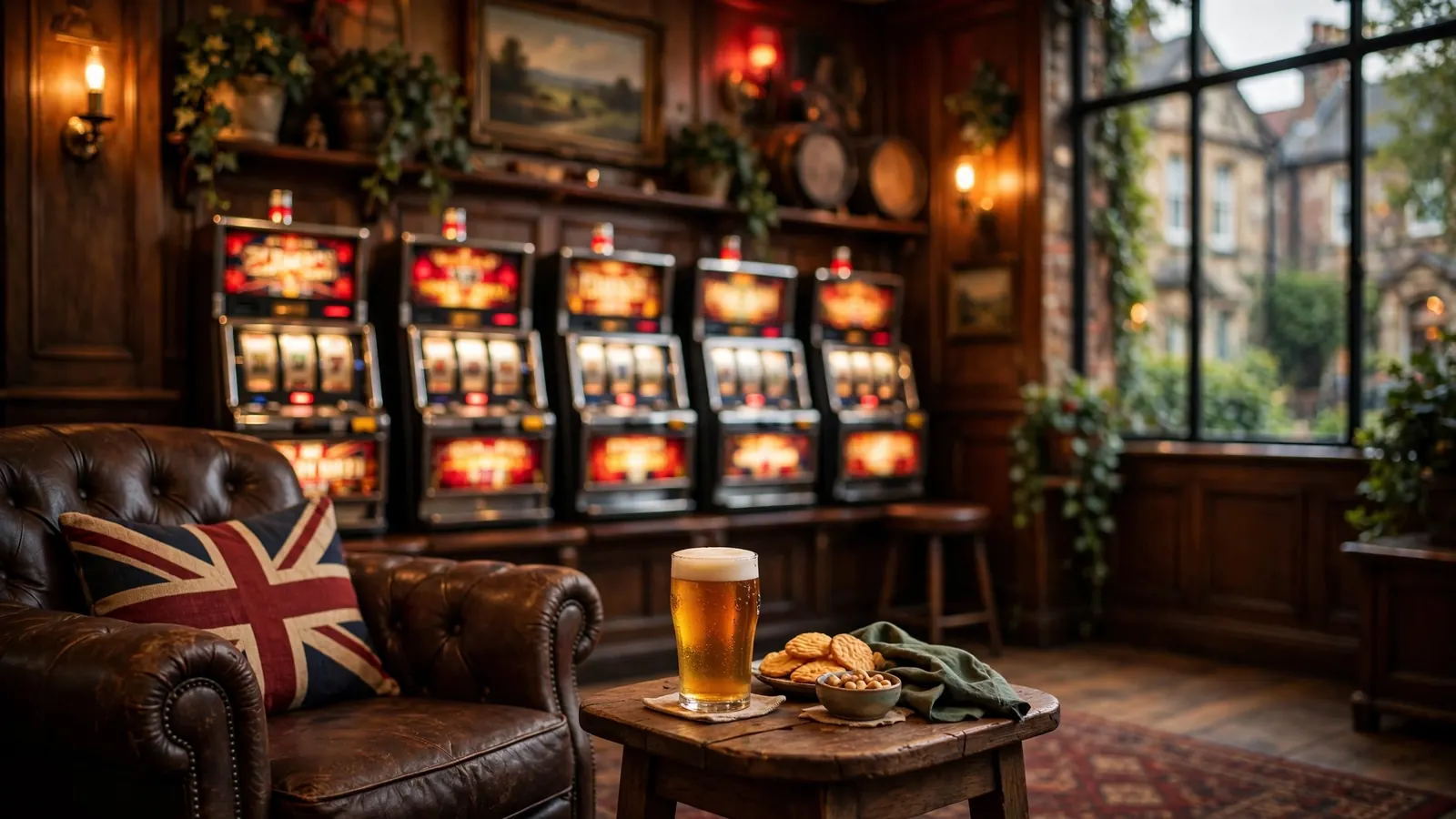
A roulette image or title does not make an online slot a roulette table. A slot runs through individual spins of its own game, while roulette is played around a wheel. The shared theme is visual: it does not transfer the wheel’s pockets, betting options or probability calculations to the slot.
That distinction matters when interpreting names such as “3D”, “Gold” or “Platinum”. These words may describe presentation or identify a particular game, but they do not establish its rules, return or odds. A roulette-themed slot can use casino imagery without reproducing European roulette’s single-zero format. Its own game information is the relevant place to check how a spin works and what its published return is; the table’s odds cannot be used as a substitute.

The same applies to a search for European roulette slots. It may lead to products with roulette styling, but the phrase alone says nothing about whether the product is a table game or a slot. The distinction should be made from the game type and rules, not inferred from the name or artwork. A slot label that sounds like a roulette variant is not evidence that its outcomes follow a roulette wheel.
The arithmetic therefore belongs to the product being played. European roulette has a defined wheel and table, whereas a slot’s stated features and return belong to that individual game. Comparing the two as if they shared one set of odds would mix unlike products. A roulette-themed design can be a useful visual cue, but it is not a probability specification.
British online slot rules also differ from the mechanics of a roulette table. Autoplay is prohibited, so a slot cannot be set to run spins automatically. Each online slot spin must last at least 2.5 seconds. These are requirements for online slots, not a description of how quickly a roulette wheel turns or how a roulette round is delivered.
When reviewing a themed game, the practical check is to separate appearance from terms: identify whether it is a slot or a table, then read the rules and published return for that product. A roulette motif does not carry European roulette’s odds into a slot, and a slot’s name cannot establish those odds. That is the full distinction: theme is packaging; game type determines which rules apply.
Slot vs Table
- A roulette theme in a slot does not transfer the wheel’s pockets or probability calculations
- Roulette-themed slots are governed by slot-specific rules, such as the prohibition of autoplay
- Each slot spin must last at least 2.5 seconds, regardless of the theme
- The game type, not the name or artwork, determines the applicable rules and return
Live European Roulette: Dealer, Licence and Safeguards
Live European roulette combines a streamed studio table with a human dealer and a physical ball drop. The sequence is visible as it happens, rather than generated on screen by a random number generator. The format changes how the game is presented; it does not change the need to assess the operator’s legal status before real-money play.
In Great Britain, the UK Gambling Commission (UKGC) is the regulator responsible for online casino gambling. An operator offering real-money live roulette to British residents must hold the relevant UKGC licence. A platform without a valid UKGC licence cannot legally provide that service to people in Britain. Offshore availability does not replace the required local authorisation.
Licence status can be checked against the UKGC’s public register before depositing. The licence is the regulatory condition, not a decorative badge: it connects the operator to British rules on customer protection and complaints. UKGC licensees must provide an internal complaints procedure and access to an approved Alternative Dispute Resolution service if a complaint remains unresolved.
Player controls also form part of the operating requirements. UKGC-licensed operators must make deposit limits and loss limits available, alongside session-time reminders and reality checks. Cool-off periods allow an account holder to take a temporary break; GamStop provides self-exclusion across participating UKGC-licensed gambling businesses. These controls are separate from the live table itself and should be accessible through account tools.
The protections have practical value only when they can be located and used. Limits should be set at account level, while reminders and reality checks interrupt a session with information about time spent. A cool-off period and GamStop serve different purposes: one is a temporary account break, the other a broader self-exclusion measure. None changes roulette’s outcome or turns a live broadcast into a safer result; they govern access and account use.

UKGC licensees are also required to contribute to the Research, Education and Treatment levy. Taken together, licensing, complaints routes and account safeguards define the conditions under which live roulette can be offered legally in Britain. The dealer and wheel are the visible part of the product; the licence and controls determine whether the real-money service is permitted.
European and American Roulette: The Zero Changes the Price
The key difference in European roulette versus American roulette is the number of green pockets. A European wheel has 37 pockets: numbers 1 to 36 and one zero. The standard American wheel has 38, adding a double zero to the same numbered range. That extra pocket changes the probability of a winning result without changing the appearance of the numbered sequence.
The difference is reflected in the house edge. European roulette has a 2.70% edge, while the standard American version has a 5.26% edge. The gap is not a matter of a different payout printed beside a bet; it comes from the added chance that the ball lands on a green pocket. Across repeated play, that changes the expected cost of wagering.
Some American roulette tables offered by UK online casinos include a third green pocket marked 000. A specialist review reports this variant with a 7.69% house edge. The extra pocket makes a material difference: it raises the house edge above the standard American figure. The table rules and pocket count therefore need to be read together; “American roulette” alone does not identify every version.
For a player comparing an online European roulette casino game with an American table, the relevant distinction is structural rather than cosmetic. The single-zero wheel gives the player a lower house edge than the standard double-zero wheel, while a third-zero version has a still higher edge. The game name is not enough to establish the price of a spin.

This comparison concerns the standard wheel variants, not a guarantee of results in any session. Roulette outcomes remain chance-based; the lower European edge describes the game’s mathematical cost over time, not a promise that an individual bet will win.
What is the difference between European and American roulette wheels?
European roulette has 37 pockets: numbers 1–36 and one zero. American roulette has 38, adding a double zero; some UK online tables also offer a third green pocket marked 000.
Can I use a casino bonus to play American roulette?
It depends on the operator’s bonus terms: roulette may count towards wagering requirements at a reduced rate, and the contribution varies by operator. Check the terms for the specific game and bonus before playing.
What are inside and outside roulette wagers?
Inside bets cover specific numbers or small groups of numbers, such as a single-number bet or a split bet on two adjacent numbers. Outside bets cover broader groups, including red or black, even or odd, and high or low; these pay 1:1.
What is the house edge on European roulette compared to American roulette?
Standard European roulette has a 2.70% house edge, compared with 5.26% for American roulette. The American basket bet has a higher edge of 7.89%.
Written by the editors at Vegas Moose Casino 3.